
Each chart square is one stitch
The grid on your pattern matches the grid of holes on the fabric.
Cross stitch is simple once you know what the chart, fabric, and thread are telling you. This guide walks through the first project calmly, from supplies to finishing.
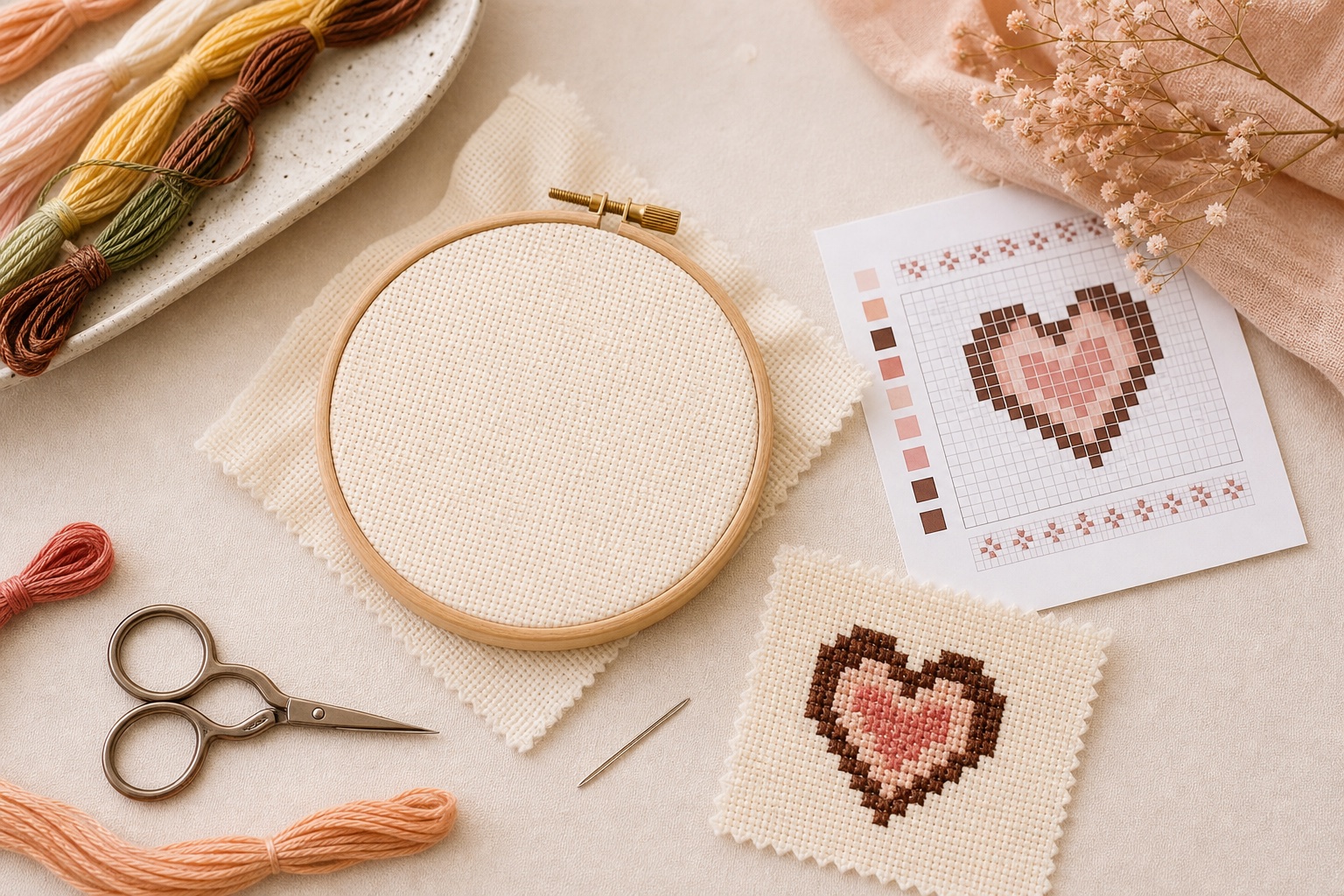
The grid on your pattern matches the grid of holes on the fabric.
Fold the fabric and use the chart's centre marks so the design lands neatly.
Consistent direction is the little habit that makes beginners look tidy fast.
You do not need a big sewing basket to begin. A small hoop, beginner-friendly Aida, a needle, scissors, and the right floss colours are enough for a first pattern.
Aida fabric, usually 14 count for a first project
Embroidery hoop or frame
Blunt tapestry needle
Embroidery floss in the pattern colours
Small sharp scissors
Printed pattern or chart
Masking tape, clips, or a zig-zag stitch for raw fabric edges
These are the habits that make a first project feel manageable, even if the pattern looks mysterious at the start.
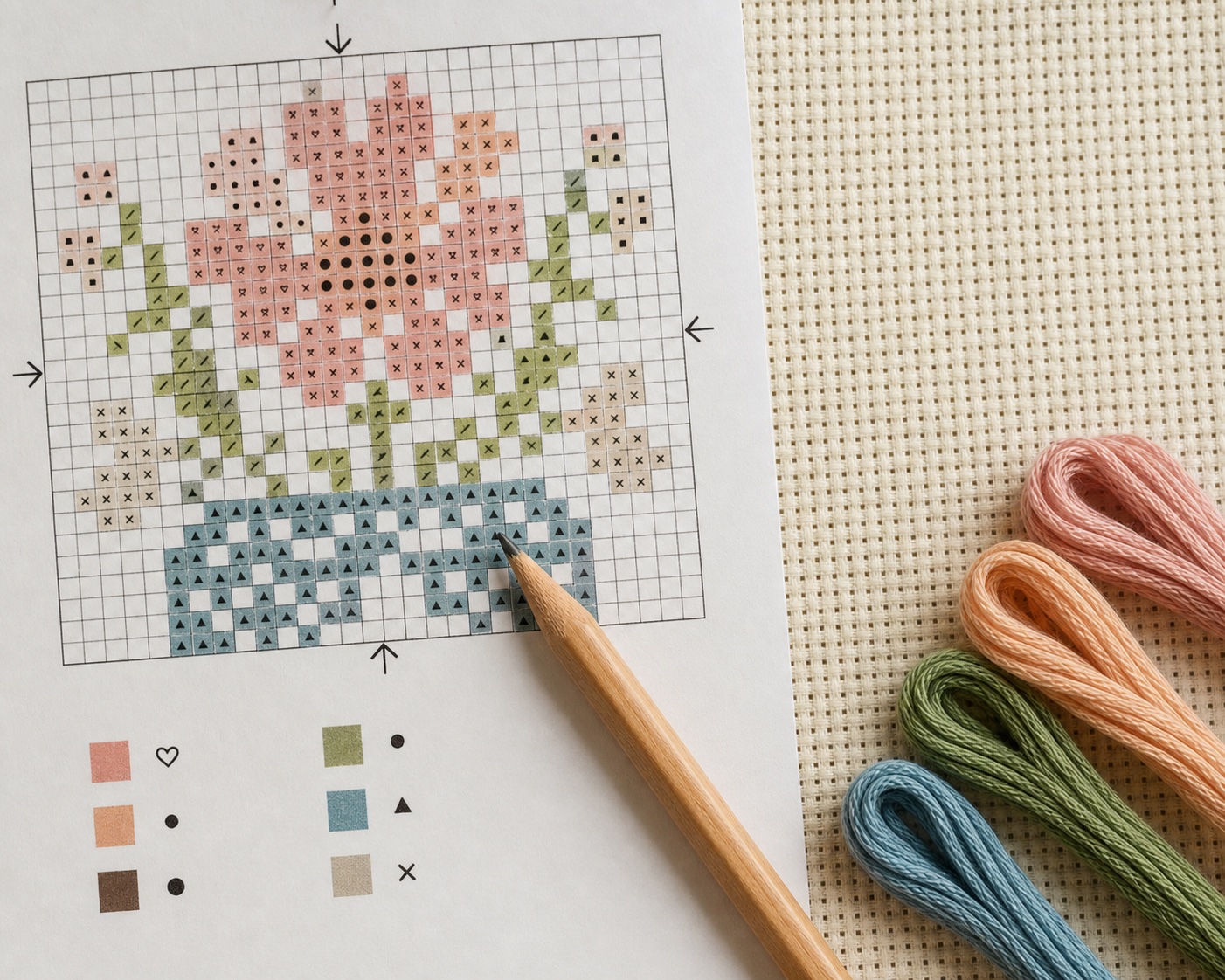
A cross-stitch chart is a grid. Every coloured or symbol-marked square tells you where one X goes. The colour key tells you which floss to use, and centre arrows help you place the design before you stitch.
If the pattern is large, mark completed rows lightly on a printed copy.
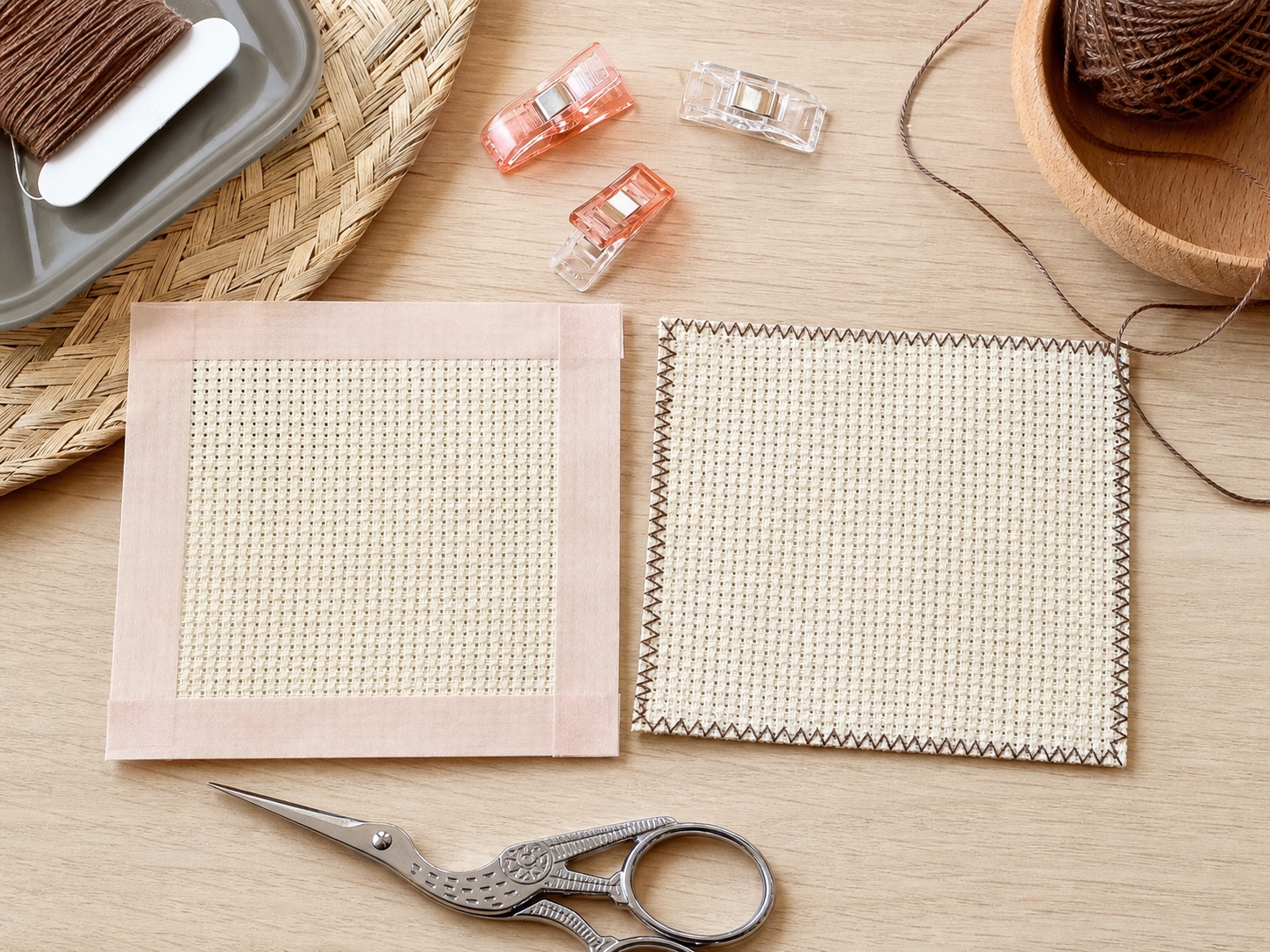
Cut the fabric bigger than the finished design so there is space for holding, framing, and small corrections. Secure the raw edges with tape, clips, or a quick zig-zag stitch so they do not fray while you work.
For a keepsake, leave at least 2 to 3 inches of fabric around the stitched area.
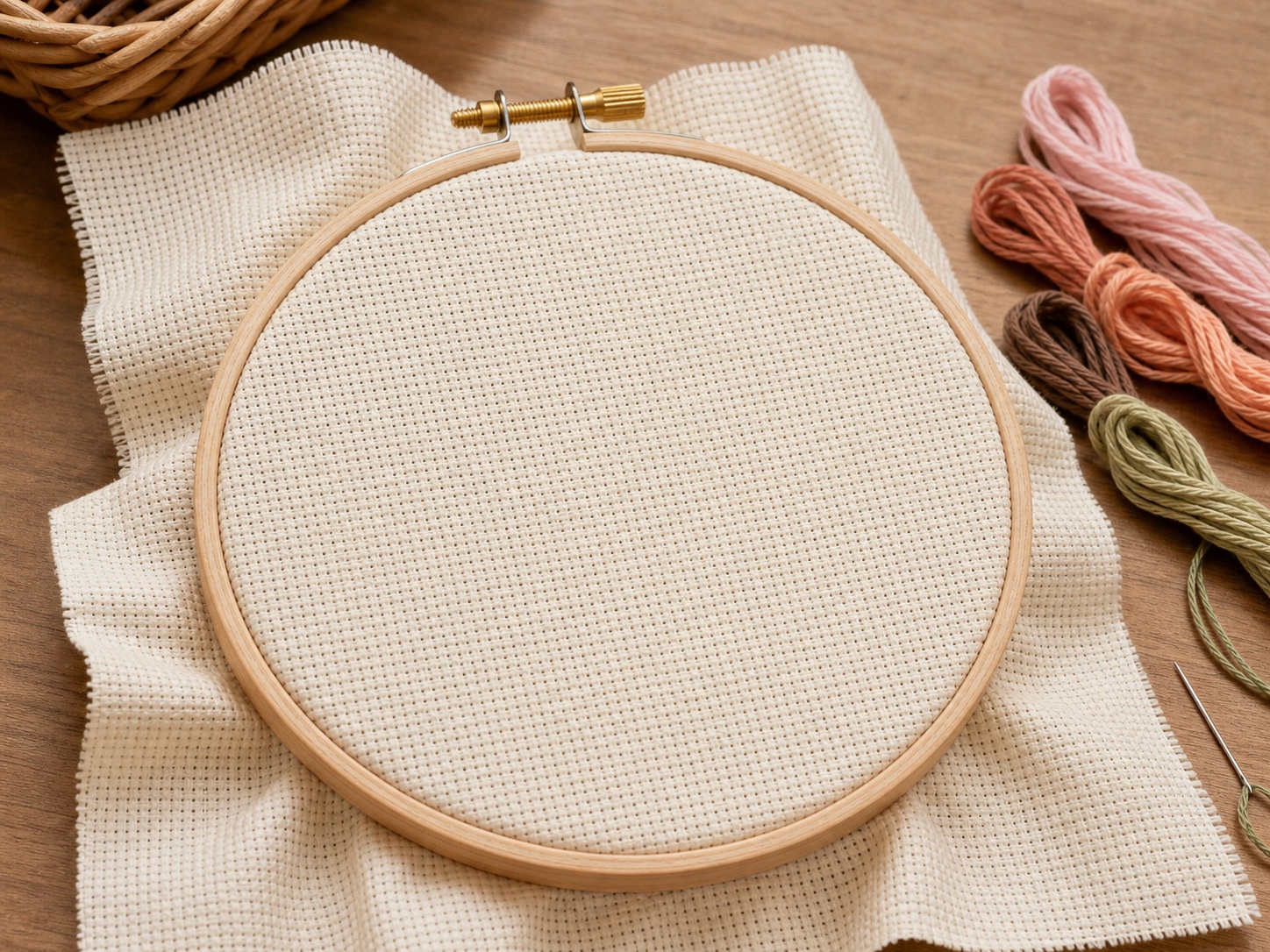
Place the fabric over the smaller hoop, press the larger hoop over it, then tighten the screw. Pull gently around the edges until the fabric feels even, not stretched out of shape.
Take the fabric out of the hoop between sessions to avoid deep hoop marks.
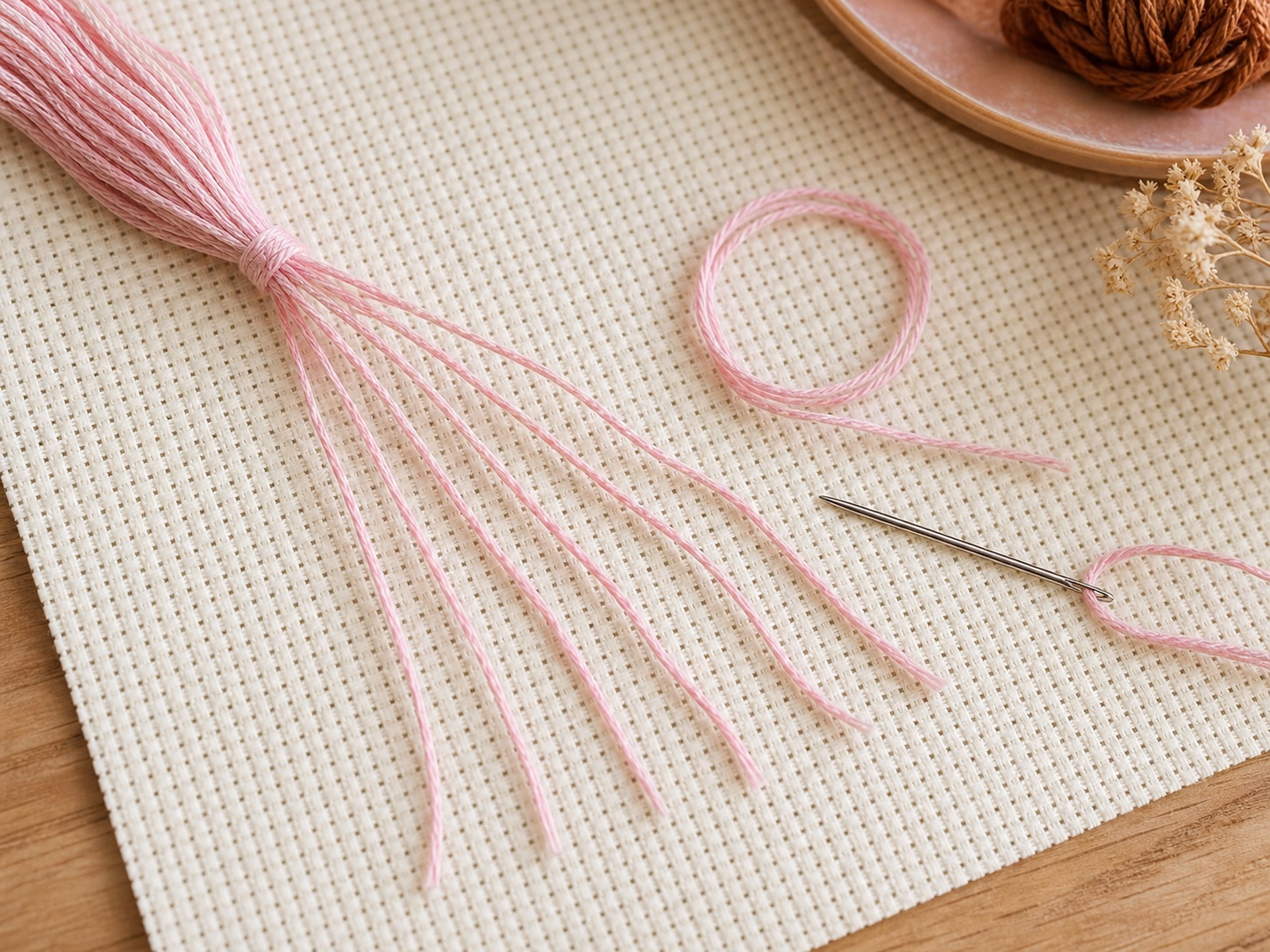
Cut a comfortable length of floss, then separate only the number of strands your pattern asks for. Most beginner patterns use two strands on 14-count Aida. Thread the needle and leave a small tail.
A thread length from fingertip to elbow is plenty. Longer lengths tangle more.
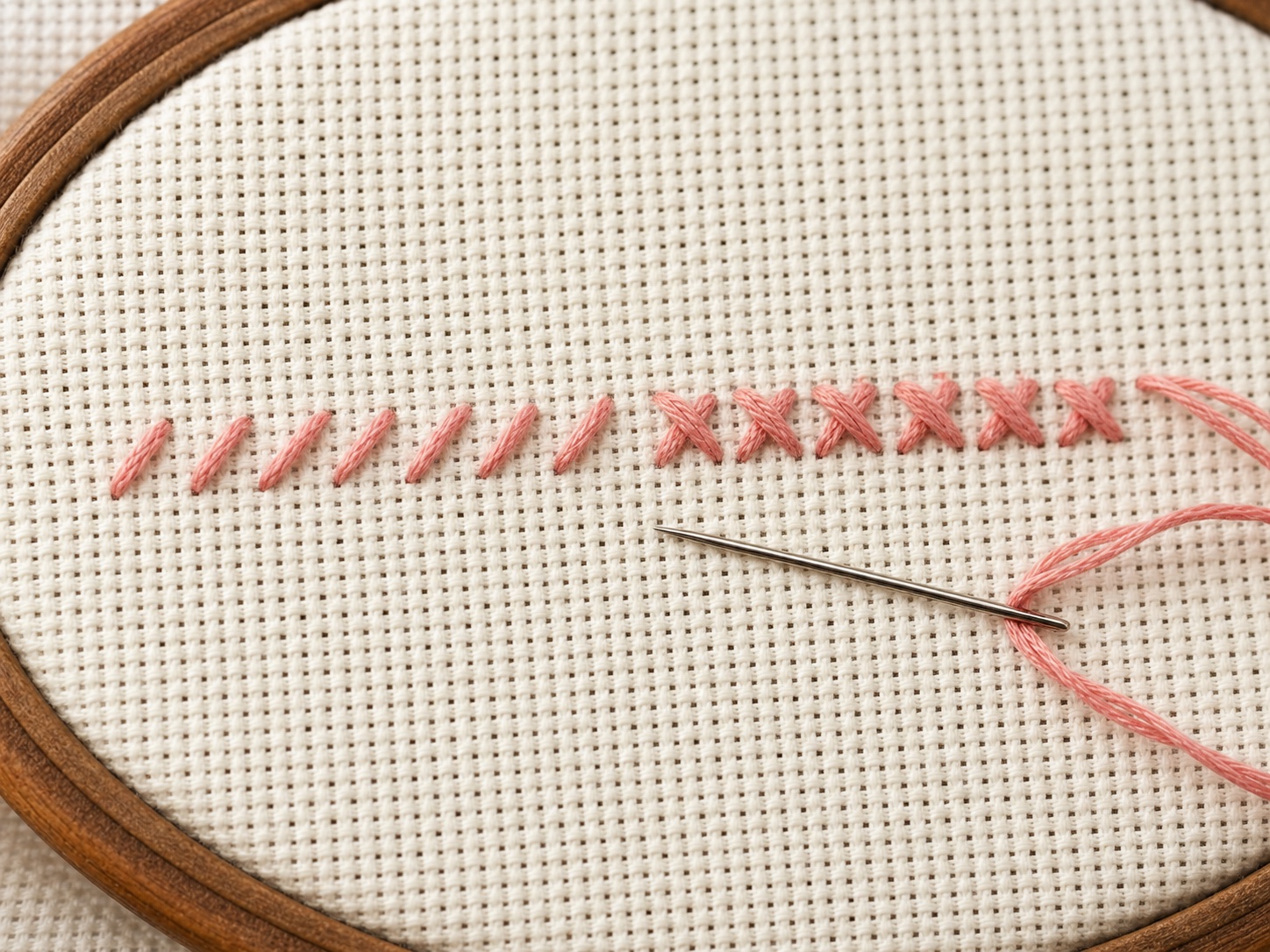
Bring the needle up from the back, make a row of diagonal half-stitches, then come back across the row to finish the X shapes. You can also complete one X at a time when the colour changes often. Always make sure your crosses follow the same direction.
Do not pull hard. The thread should sit on the fabric, not pinch it.
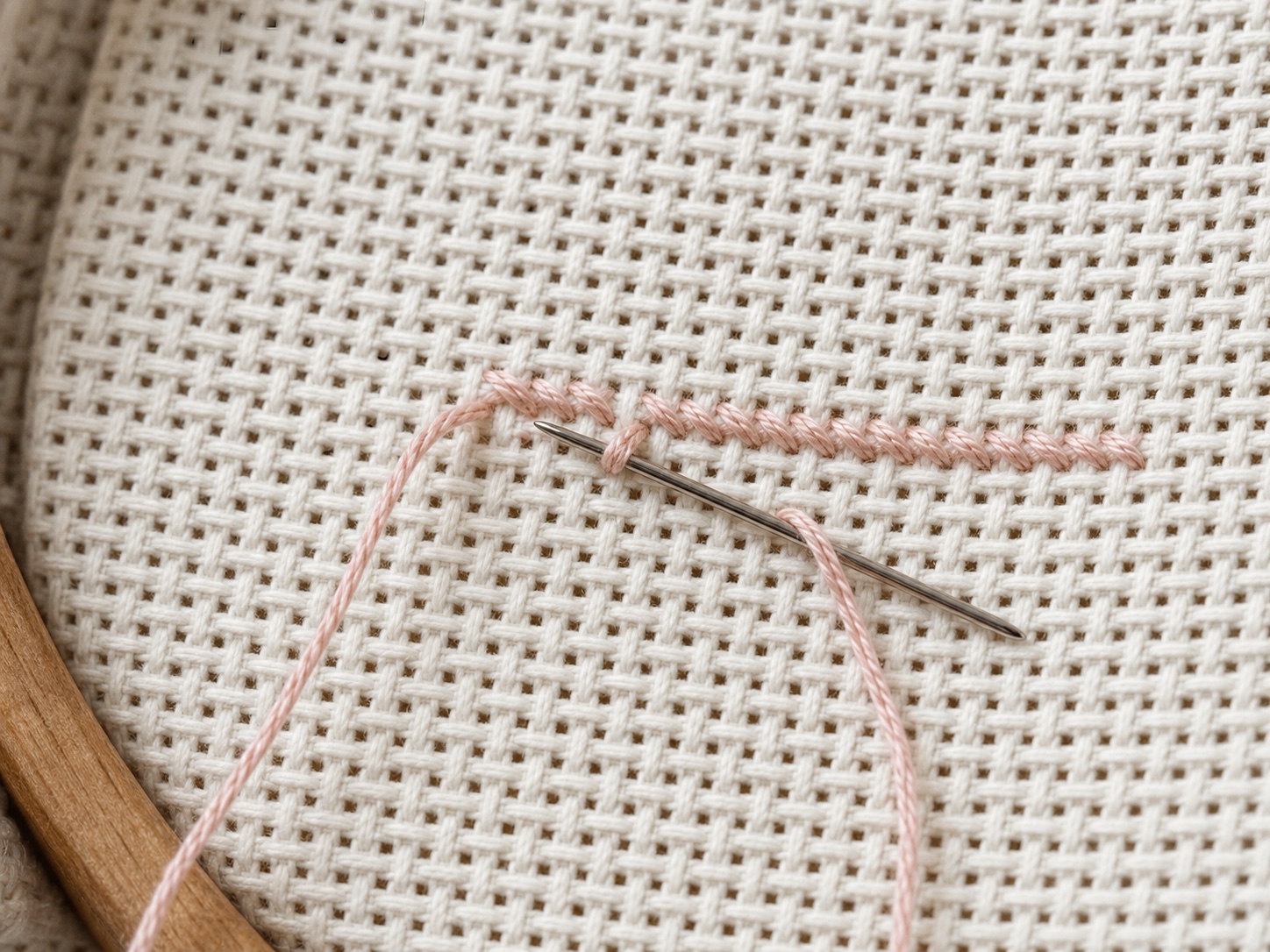
When the thread gets short, turn the hoop over and run the needle under a few stitches on the back. Trim the extra tail close to the fabric. The front stays smooth and the back stays neat enough.
A tidy back is useful, but the front is the part everyone will see.
Cross stitch is forgiving. If a stitch is only one square out, you can often remove it with the needle tip and restitch. If it is buried deep in a section, decide whether anyone will notice before you undo a whole evening.
Your first project should feel like practice with a prize at the end. Start with a tiny motif, a name hoop, or one of our free beginner patterns.